OUR THEORY OF CHANGE:
When neighbors are organized around a shared landscape, and are given the resources, relationships, and technical support to act together, they can accomplish watershed-scale restoration and wildfire resilience that no individual landowner or agency could achieve alone.
Lasting wildfire resilience and watershed recovery happen when neighbors steward the landscape together.

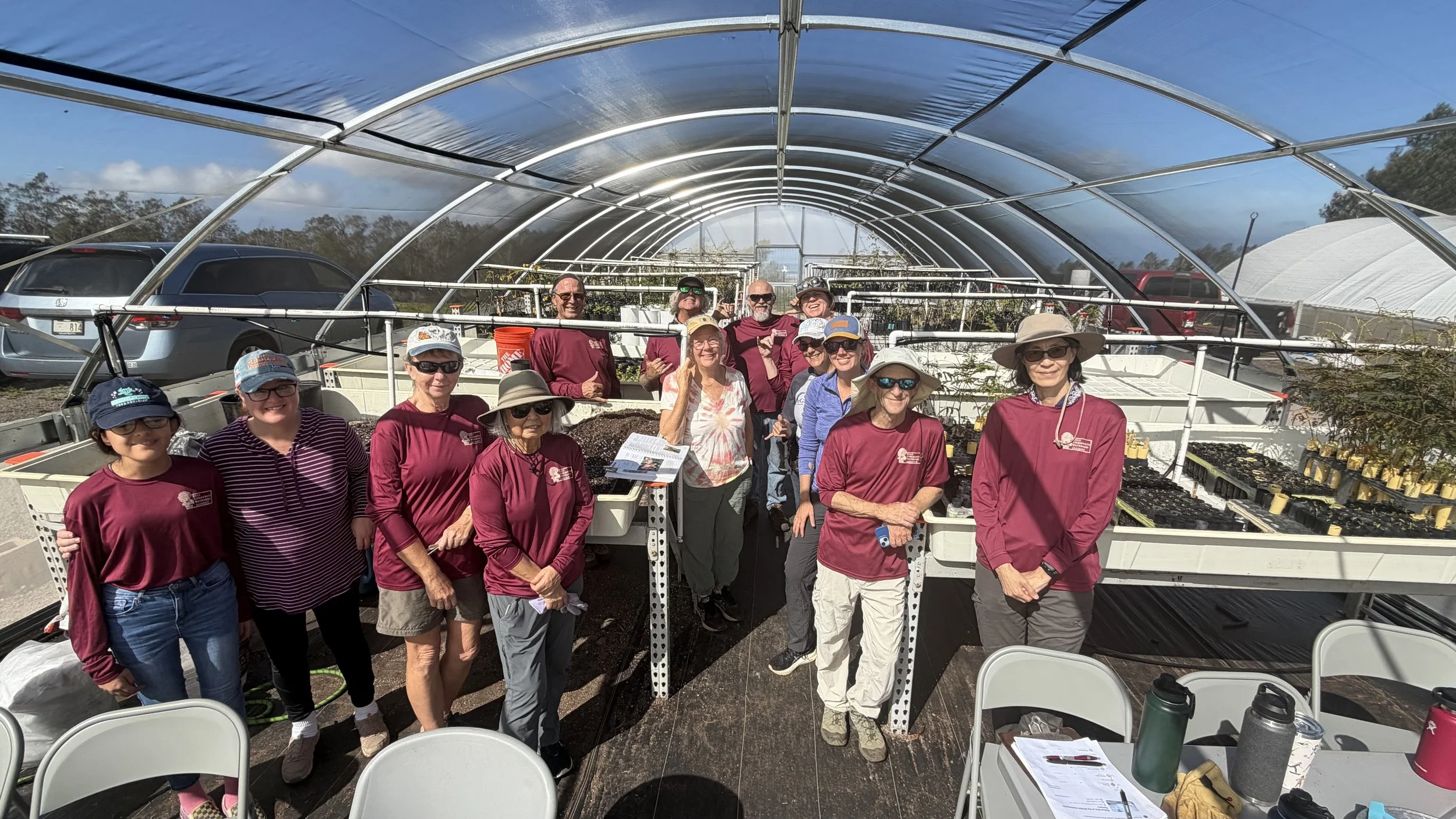
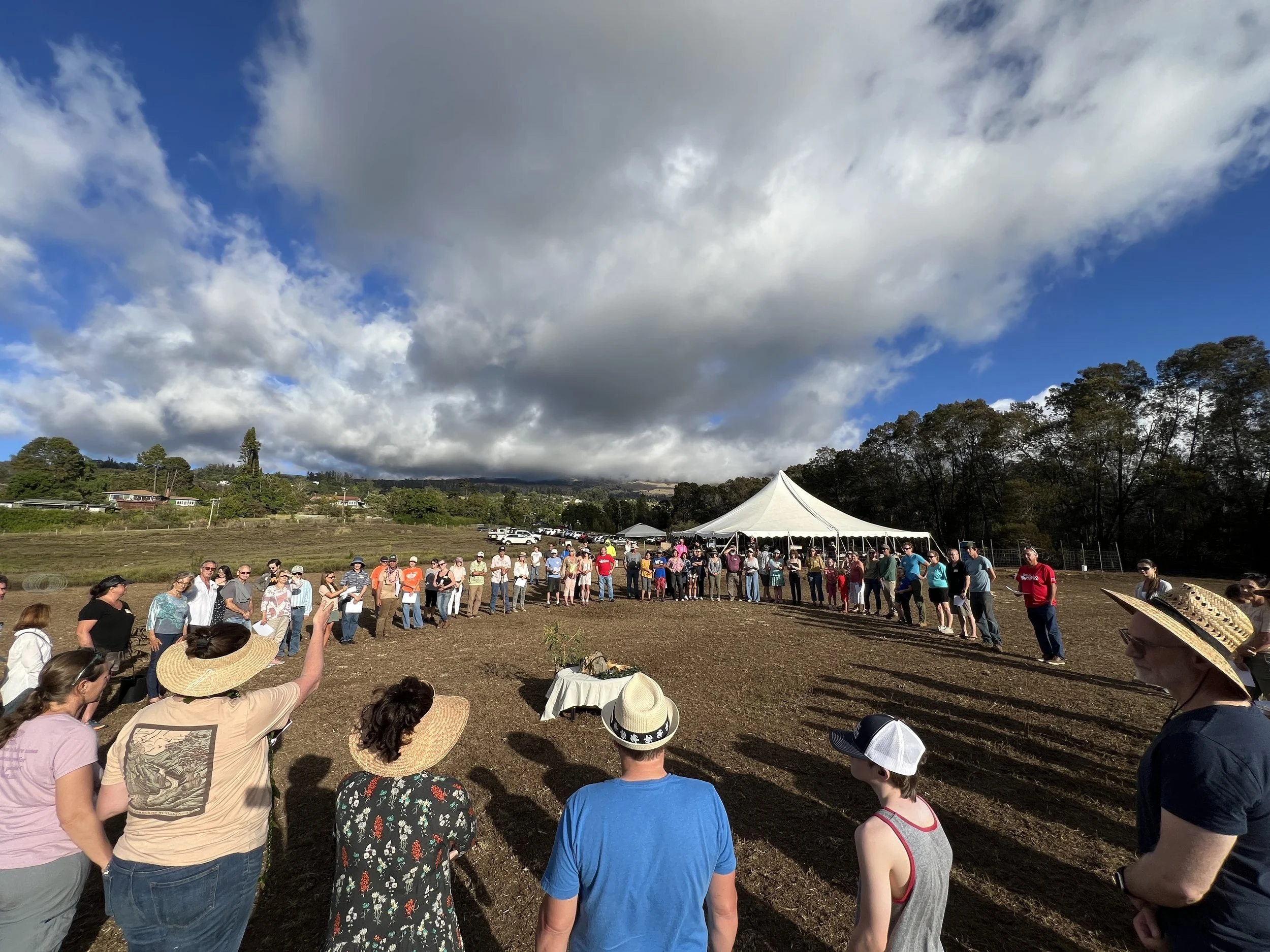
The challenges facing Kula after the wildfires cannot be solved one property at a time.
Outbreaks of aggressive invasive species, eroding slopes, flooding, habitat loss, and declining watershed health do not recognize parcel boundaries. Water flows downhill, fire spreads across ownership lines, and deer move freely across the landscape. What happens on one property affects the health and safety of the entire community.
For generations, these lands functioned as interconnected systems. Restoring resilience requires us to think—and steward—at that same scale.
Kula Community Watershed Alliance was founded on a simple belief:
The people who live on and care for the land are essential partners in its recovery.
Rather than approaching restoration as something done to a community or for a community, we work alongside each other as landowners, ranchers, farmers, practitioners, agencies, funders, volunteers, and neighbors to build the relationships, knowledge, and capacity needed for long-term stewardship.
But we've learned something else along the way.
The knowledge needed to restore a watershed doesn't live only in scientific literature or technical reports. It also lives in people who have watched this landscape for decades—in the observations of kūpuna, longtime ranchers, farmers, hunters, residents, and others who know the rhythms of Kula through lived experience.
They remember when springs flowed year-round. They remember shifting winds, changing rainfall, the flowering of native plants, the movement of wildlife, and the ways land management has changed across generations.
This place remembers.
And caring well for its future requires us to remember alongside it.
We believe that ecological science, ʻike kūpuna, local experience, and community stewardship are not competing ways of knowing—they are complementary. Together, they help us understand not only how to restore landscapes, but how to sustain resilience on the land in our communities for generations to come.
As we work together to restore shared landscapes, we also strengthen relationships, trust, and a shared identity rooted in stewardship. Those human connections become part of the resilience of the watershed itself.
Ultimately, we are not simply restoring burned land.
We are cultivating a community that knows its landscape deeply, learns from it continually, and accepts the shared responsibility of caring for it together.
Because lasting wildfire resilience and watershed recovery depend not only on healthy ecosystems, but on healthy relationships—between people, place, and one another.