Beyond Fuel Reduction: What Science Is Teaching Us About Restoring Fire-Affected Landscapes
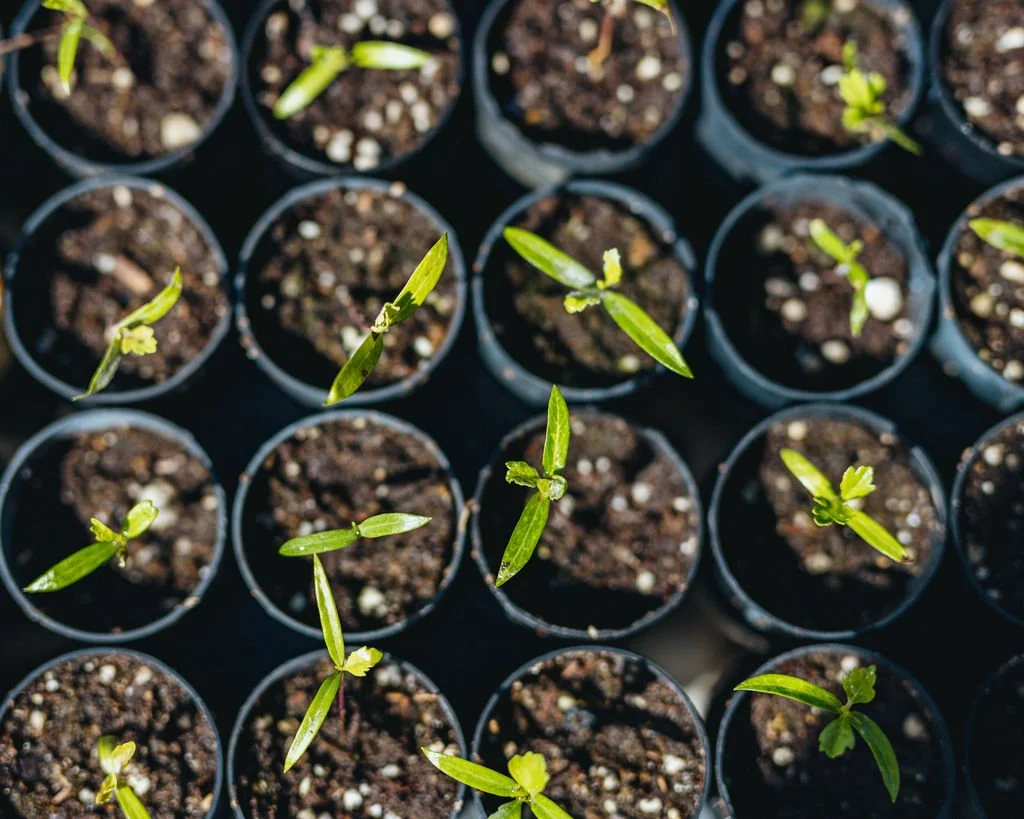
Native seedlings sprouted from wild-collected trees at KCWA Community Restoration Nursery at Pūlehunui Sanctuary. PHOTO: Cody Lang
by Sara Tekula
In the years following the 2023 Kula wildfire, many of us have asked the same question:
What does successful post-wildfire restoration actually look like?
Across Hawaiʻi and throughout the western United States, land managers are grappling with the same challenge: how do we reduce future wildfire risk while rebuilding healthy, resilient ecosystems?
Recent research offers some important insights. While these studies were conducted in ecosystems very different from Kula, many of the lessons align closely with what our community has observed on the ground.
Perhaps most importantly, the emerging science reinforces a simple idea:
Wildfire recovery is not just about removing fuels. It is about guiding ecological succession toward a healthier future.
For KCWA, that means looking beyond individual projects and focusing on the recovery of the entire Pōhakuokalā-Pūlehu awāwa and the watershed it supports.
___________
Hazardous Fuel Reduction Is Only the First Step
One of the strongest themes emerging from restoration science is that reducing hazardous fuels alone does not create long-term resilience.
Recent work by the U.S. Forest Service highlights new technologies that allow crews to safely reduce hazardous vegetation on steep slopes that were previously inaccessible. These tools can play an important role in reducing wildfire risk, particularly in challenging terrain.
But mechanical treatment is only the beginning.
Without follow-up management, treated areas can quickly become dominated by invasive grasses and weeds, recreating the very conditions that contribute to future wildfire risk.
KCWA’s community of stewards view restoration as a sequence: Stabilize → Protect → Restore → Maintain.
Hazardous fuel reduction helps create safer conditions in the near term. The long-term goal is a living landscape that can resist erosion, suppress invasive species, increase stormwater infiltration, support native biodiversity, and reduce wildfire risk.
In other words, fuel reduction is not the destination.
It is the first step toward recovery.
Fuel Breaks Need to Be More Than Cleared Vegetation
Reducing hazardous fuels is an important component of wildfire resilience, but recent research suggests that what happens after treatment may be just as important as the treatment itself.
A 2026 study published in Fire Ecology examined how different fuel break strategies influenced invasive plant communities. Researchers found that repeatedly mowed fuel breaks often supported higher levels of exotic annual grasses, particularly near fuel break edges.
This matters because invasive grasses can create continuous fine fuels that carry fire rapidly across the landscape.
The findings suggest that successful fuel breaks should not simply be maintained as cleared corridors. Instead, fuel breaks can be designed as living landscape features that incorporate fire-resistant vegetation, erosion control, and ongoing stewardship.
For KCWA, this reinforces an approach that combines hazardous fuel reduction with fencing, native planting, invasive species management, and long-term maintenance.
The goal is not a cleared landscape. The goal is a living landscape that is less likely to burn catastrophically.
Over time, restoration areas can become shaded green breaks that interrupt fuel continuity while simultaneously supporting watershed recovery.
Not All Native Plants Perform the Same
Another emerging area of restoration research examines the difference between commercially produced native plant varieties and wild-collected native plant populations.
A recent study published in Restoration Ecology found that commercially selected native plants often produced more aboveground growth than wild-collected native plants. At first glance, that may seem desirable.
However, researchers also found that some wild native plant communities were substantially better at suppressing invasive grasses.
This finding is important because post-fire landscapes are often engaged in a race between native recovery and invasive species establishment.
The study suggests that locally adapted native plant populations may possess ecological traits that are difficult to replicate through commercial cultivation alone.
For Hawaiʻi, where many native species evolved in highly specialized environments, this reinforces the value of local seed collection, community-based propagation, and place-based restoration efforts.
It also highlights the importance of protecting remnant native plants and surviving seed sources whenever possible. The next generation of a recovering ecosystem often begins with what remains.
Restoration Is About Relationships, Not Just Plants
Another lesson emerging from restoration science is that healthy plant communities often outperform individual high-performing species.
Researchers are increasingly finding that diversity, balance, and ecological relationships matter as much as rapid growth.
A restoration site filled with fast-growing plants may look successful in the short term. But if those plants fail to suppress invasive species, support wildlife, stabilize soils, or build long-term ecosystem resilience, restoration goals may not be achieved.
This is especially relevant in Hawaiʻi, where native ecosystems evolved through complex relationships among plants, insects, birds, fungi, water, and place.
The goal is not simply to plant trees. The goal is to help ecological relationships recover.
_____________
What This Means for Kula
At KCWA, these findings reinforce several principles that guide our work:
Reduce hazardous fuels while minimizing unnecessary soil disturbance.
Retain stabilizing root systems and less threatening vegetation whenever possible.
Protect restoration areas from browsing animals before planting.
Prioritize locally adapted native species and seed sources whenever feasible.
Focus on restoring plant communities rather than individual species.
Restore living cover quickly following fuel reduction to reduce erosion, increase infiltration, and limit invasive species establishment.
Commit to long-term stewardship, maintenance, monitoring, and adaptive management.
Most importantly, the science continues to affirm something our community has understood from the beginning:
Lasting watershed recovery happens when neighbors steward the landscape together.
The Kula burn scar is not a collection of isolated parcels.
It is a connected watershed.
Water moves across property boundaries. Soil moves across property boundaries. Seeds move across property boundaries. Fire moves across property boundaries.
Our restoration strategy reflects that reality.
By working together across the landscape, we have an opportunity not only to recover from the fire, but to guide the awāwa toward a healthier, more resilient future.
Because restoration is not simply about what we remove, it is about what we help return.
Appendix: Research Referenced
U.S. Forest Service (2026)
Reducing Fuels on Steep Slopes: Highlights the use of tethered mastication systems and other tools for reducing hazardous fuels on steep terrain while improving operational safety.
Agneray & Leger (2026)
Commercial Native Plant Varieties Grow Larger Aboveground but Underperform in Invasion Resistance Relative to Wild-Collected Natives: Examines differences between commercially produced native plant varieties and wild-collected native plant communities, finding stronger invasive species suppression in several wild native communities.
Fire Ecology (2026)
Fuel Breaks and Invasive Plant Dynamics: Investigates how fuel reduction strategies influence invasive plant establishment and suggests that vegetation-based fuel treatments may provide advantages over repeated mowing alone.