Wildfire Is a Risk Multiplier: Why Watershed Restoration Must Cross Property Lines
by Sara Tekula
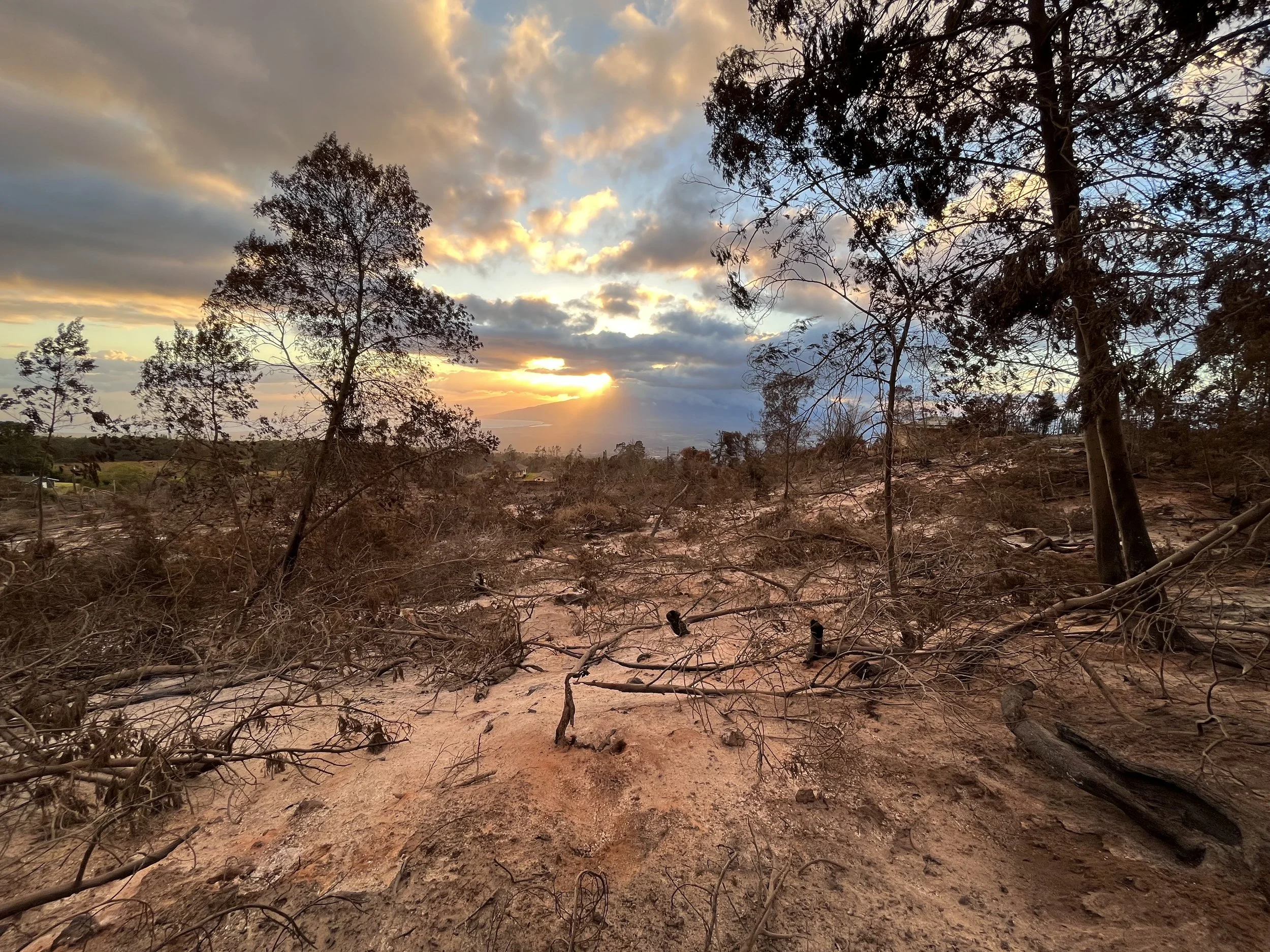
Wildfire recovery does not end when the flames go out. Restoring the watershed means addressing the connected risks that remain—and rebuilding resilience across property lines.
We often speak about wildfire as though it were a stand-alone event.
A fire ignites. Flames move across the landscape. Homes, forests, fences, farms, and infrastructure are damaged or destroyed. The fire is eventually contained, and the community begins the long process of recovery.
But a wildfire does not simply burn what is in its path.
It changes the conditions surrounding everything that remains.
It removes vegetation that once held soil in place. It weakens trees and exposes slopes. It creates openings where invasive plants can spread. It damages fences that once helped manage livestock and wildlife. It changes how rain moves through a landscape and how well the soil can absorb and retain water.
It also places new financial, physical, and emotional burdens on families that may already be coping with displacement, loss, insurance challenges, health concerns, and the work of rebuilding their lives.
Wildfires are not stand-alone events, they are risk multipliers.
What Does It Mean to Call Wildfire a Risk Multiplier?
A risk multiplier is something that intensifies existing vulnerabilities and creates conditions in which one problem makes another more likely—or more difficult to solve.
In a fire-affected watershed, these risks are deeply connected.
When fire removes plants and organic material from the soil surface, the land loses some of its ability to slow and absorb rainfall. Water may begin moving more quickly downhill, carrying ash, sediment, rocks, and debris with it.
That erosion can affect properties, roads, gulches, drainage systems, streams, and coastal waters far beyond the original burn area.
Meanwhile, invasive grasses and other fire-adapted plants may return more quickly than native vegetation. These plants can dry out seasonally and contribute to the fuel conditions for another fire.
If grazing animals or axis deer browse the native plants that do survive—or consume newly planted restoration areas before they can mature—the land may remain exposed for even longer.
The result is not one isolated environmental problem. It is a cycle:
Fire removes vegetation.
Bare soil becomes more vulnerable to erosion.
Rain carries soil and nutrients away.
Invasive plants recolonize disturbed areas.
Those plants create new fuel.
Young native plants struggle to establish.
The landscape becomes more vulnerable to the next drought, storm, or ignition.
Each risk strengthens the next.
The Human Risks Multiply Too
The ecological impacts of wildfire cannot be separated from what happens to the people who live within the affected landscape.
After a fire, a family may be repairing or rebuilding a home while also dealing with burned trees, damaged fencing, unstable slopes, invasive weeds, displaced wildlife, increased fire risk, and major changes to the land around them.
They may be trying to make complicated land-management decisions while navigating grief, trauma, financial uncertainty, insurance claims, permitting, childcare, work, and daily life.
Even landowners whose homes survived can be left with acres of damaged land that require specialized knowledge, equipment, labor, and long-term maintenance.
Expecting each household to solve these problems independently is neither realistic nor effective.
Water does not stop at a property line. Neither do wildfire, wind, smoke, erosion, invasive plants, wildlife, or hazardous vegetation.
A decision made on one parcel can affect the family next door, the neighborhood below, and the health of the larger watershed.
That understanding was central to the creation of the Kula Community Watershed Alliance.
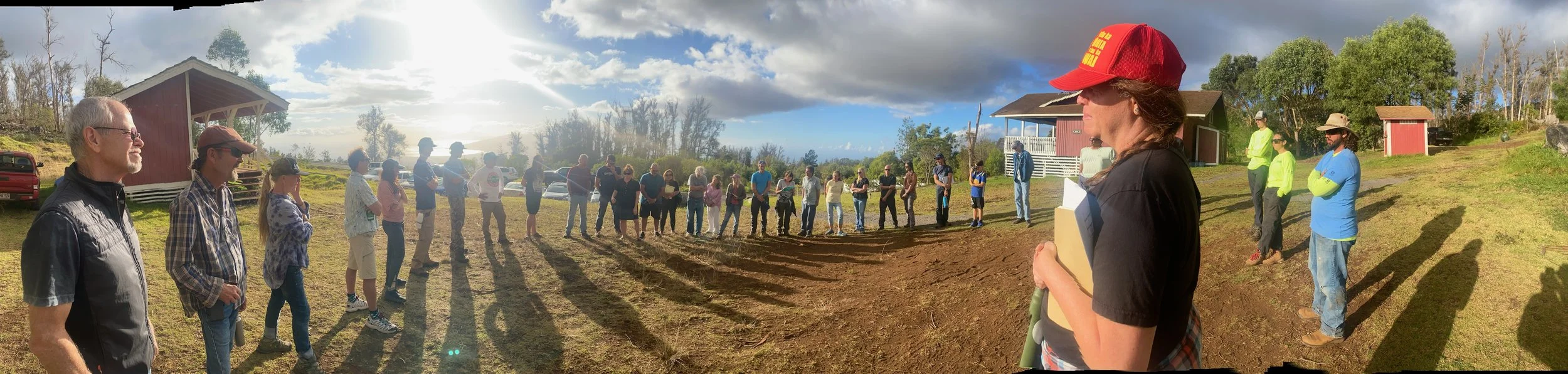
August 31, 2023: The founding of KCWA, 3 weeks after the fire
Why KCWA Was Founded
KCWA was founded by fire-affected neighbors who recognized that recovery could not happen one isolated property at a time.
The Kula Fire burned across a fragmented landscape made up of homes, farms, ranchlands, forested areas, gulches, roads, and undeveloped parcels. The ownership boundaries were clear on a map, but the ecological systems connecting them were not divided in the same way.
The fire revealed how deeply each property depended on the condition of the lands around it.
A landowner might clear invasive fuel from one parcel, but remain vulnerable to unmanaged vegetation next door. A family might plant native trees, but lose them to deer moving freely across multiple properties. One slope might be stabilized, while runoff and sediment continued moving from higher ground.
A single landowner could make meaningful progress, but lasting resilience would require neighbors to work across boundaries.
KCWA emerged from a shared belief:
Wildfire risk crosses property lines, so recovery and resilience must cross them too.
Our work is not simply about repairing what burned. It is about changing the underlying conditions that allowed risk to accumulate across the landscape in the first place.
A Watershed Approach to Wildfire Recovery
A watershed is not only a body of water or a stream channel. It is the entire area of land through which water moves on its journey downhill.
That means the condition of upper slopes, forests, farms, neighborhoods, gulches, and soils are all part of the watershed, and all influence what happens below.
Healthy watershed lands can slow water, reduce erosion, support groundwater recharge, retain moisture, cycle nutrients, provide habitat, and help moderate local temperature.
Degraded lands may shed water quickly, lose soil, support dense invasive fuels, and recover poorly after disturbance.
For KCWA, watershed restoration and wildfire resilience are inseparable. We cannot talk about reducing future fire risk without talking about soil. We cannot talk about soil without talking about water. We cannot talk about native forest recovery without addressing invasive plants and browsing animals.
And we cannot address any of these issues at the necessary scale without collaboration among landowners, community organizations, government agencies, researchers, funders, contractors, cultural practitioners, volunteers, and other partners.
Stabilize, Protect, Restore, Maintain
KCWA organizes its fire restoration work through four connected phases:

1.3 acre burned property in danger of post-wildfire erosion, treated by KCWA with a 3” blanket of mulch made from downed and partially burned Black Wattle trees.
Stabilize
The first priority after severe disturbance is to prevent additional damage.
That may include removing hazardous burned vegetation, reducing erosion, slowing runoff, stabilizing soils, managing debris, and protecting roads, homes, gulches, and access routes.
Stabilization creates the conditions needed for the land to begin recovering.
Protect
Restoration cannot succeed if the landscape remains exposed to the same pressures that contributed to its decline.
Protection may include deer-exclusion fencing, invasive-species control, fuel reduction, managed grazing, fuel breaks, access improvements, and coordinated planning across neighboring properties. At KCWA, weʻre employing every protection tool in the toolbox.
This phase gives recovering soils and vegetation a chance to survive, and requires repeated attention, care, and a long-term strategy..
Restore
Once an area has been stabilized and protected, restoration can begin in earnest.
This means rebuilding diverse, site-appropriate plant communities that help shade soil, retain moisture, recharge aquifers we depend on for clean water, slow rainfall, suppress invasive grasses, provide wildlife habitat, and support the long-term function of the watershed from mauka to makai.
Restoration is not simply a matter of planting trees. It is the process of helping a living system return.
Maintain
Landscapes do not remain restored without continued stewardship.
Fences need repairs. Weeds return. Fuel conditions change. Plants require monitoring. Drought, storms, wildlife, and new disturbances create unexpected challenges.
Maintenance is not the final task on a checklist. It is an ongoing relationship with the land.
These four phases—Stabilize, Protect, Restore, and Maintain—reflect a basic truth: no single project can solve a complex landscape problem.
Skipping one phase can undermine the others. Planting without protection may feed deer. Fuel reduction without restoration may leave disturbed soil open to another wave of invasive grasses or an erosive event. Restoration without maintenance may produce short-term results that do not endure.
Long-term resilience requires the whole cycle.
Restoration Can Also Be a Multiplier
The idea of multiplying risk can feel overwhelming. But multiplication can work in the other direction too.
If wildfire can multiply risk, restoration can multiply resilience.
When native and climate-appropriate vegetation becomes established, it can shade the ground and make it harder for sun-loving invasive grasses to dominate. When soil is protected by roots, mulch, leaf litter, woody material, and living plants, rainfall has a better chance of soaking into the land rather than racing across its surface. When neighboring parcels are connected through coordinated fencing, invasive-species control, and long-term maintenance, each landowner’s work strengthens the work of the others.
When residents understand how water, fire, vegetation, wildlife, and soil interact, they are better equipped to make informed decisions about their own land. When a community develops trusted relationships before the next emergency, it is better prepared to respond when conditions change.
A restored area can improve more than ecological health. It can create learning opportunities, strengthen partnerships, rebuild community confidence, and provide visible evidence that recovery is possible.
One healthy patch of land can support the recovery of another. One landowner’s participation can encourage a neighbor to join. One successful project can attract the funding, knowledge, and public investment needed to expand the work.
This is how restoration becomes a resilience multiplier.
Changing the Conditions the Next Fire Will Encounter
We cannot eliminate every source of uncertainty.
We cannot prevent every drought, storm, extreme wind event, or ignition.
But we can change the conditions those events encounter. We can reduce accumulations of hazardous fuel. We can restore vegetation that shades and protects the soil. We can improve the ability of the land to slow and absorb water. We can reconnect fragmented restoration areas. We can manage invasive plants and browsing animals. We can create safer access for maintenance and emergency response.
And we can build the relationships, knowledge, and shared capacity that allow communities to act together.
That is a different kind of wildfire recovery.
It is not about returning the landscape to exactly what it was before the fire. In many places, the conditions that existed before the fire were already creating greater vulnerability.
True recovery asks a more difficult and more hopeful question:
What kind of landscape—and what kind of community—do we need for the future?
Why Collective Stewardship Matters
KCWA was founded on the belief that lasting wildfire resilience and watershed recovery happen when neighbors steward the landscape together.
That does not mean every property must look the same or that every landowner must make the same choices. It means recognizing our interdependence. It means understanding that the health of one property is connected to the health of the lands above, below, and beside it. It means creating ways for individual action to contribute to larger watershed outcomes.
And it means staying committed beyond the urgency of the immediate disaster.
The work of recovery is measured not only in acres cleared, fences built, or plants placed in the ground. It can also be measured in cooler soil, returning moisture, deeper roots, cleaner water, reduced fuel, stronger partnerships, and neighbors who know how to work together.
Wildfires multiply risk, but collective stewardship can multiply protection, knowledge, healing, and resilience.
That is the idea KCWA was founded upon. And that is the work we are carrying forward, together.