
OUR STORY
Born from fire. Built for the long work of recovery.
HOW WE BEGAN
Three weeks after the fire, we gathered under the trees.
In August 2023, the Kula Fire burned through homes, gulches, pastures and forest across Upper Kula. In the days that followed, neighbors were trying to understand not only what had happened to their homes, but what had happened to the land around them — and what recovery would require.
Three weeks after the fire, roughly 50 fire-affected residents gathered at the Pōhakuokalā Communty Forest Restoration Project at Skyline Hawaiʻi, just above the burn area on Haleakalā Ranch.
We met beneath a 10 year-old canopy of native koa and ʻōhiʻa — a living example of what restoration could look like in the burn scar in just a decade.
That gathering changed the direction of the recovery effort.
People shared what they were seeing on their properties, what they were afraid of, what they needed, and what they believed could be accomplished together. It became clear that the challenges ahead — erosion, invasive regrowth, hazardous fuels, ungulate pressure and the loss of native vegetation — would not stop at property lines.
Neither could the response.
On August 30, 2023, the Kula Community Watershed Alliance began as a hui of fire-affected neighbors committed to caring for the landscape together.
What started as a response to disaster became something larger: a long-term commitment to restore the watershed, reduce future wildfire risk, and rebuild the relationships between people and place that make stewardship possible.
The fire connected our properties through loss. Restoration gave us a way to revitalize them through care.
FROM RECOVERY TO WATERSHED STEWARDSHIP
We were already working together before the fire was out.
During the August 2023 Kula Fire, community members were helping fight the fire, cutting emergency firebreaks, protecting homes and assisting neighbors however they could.
As the immediate danger began to ease, the conversations quickly shifted from the fire itself to the condition of the land it had left behind.
People were looking at steep, burned slopes and asking what might happen next.
What would happen when heavy rain reached exposed soil?
Would burned trees and invasive vegetation create new hazards?
How quickly would black wattle return?
Would erosion, flooding, falling trees, invasive regrowth and future fire risk cascade from one disaster into the next?
Those questions were not theoretical. They were coming from people standing on burned properties, hiking into the burned gulch, cutting access, clearing hazards and trying to understand what recovery would require.
Three weeks after the fire, roughly 50 fire-affected residents gathered at the Pōhakuokalā Community Forest Restoration Project at Skyline Hawaiʻi, located on the same gulch, just above the burn area.
We met beneath a 10-year-old canopy of native koa and ʻōhiʻa — a living example of what long-term restoration could look like in this place.
That gathering gave structure to conversations that had already begun in the days of the fire.
Neighbors shared what they were seeing, what they feared might happen next, what they needed, and what could be accomplished if the community worked together.
It became clear that the hazards ahead would not stop at property lines.
Neither could the response.
On August 30, 2023, the Kula Community Watershed Alliance began as a hui of fire-affected neighbors committed not only to recovering from the fire, but to preventing the next wave of damage and caring for the landscape together over the long term.
KCWA grew from a community already protecting one another — first from the fire, and then from the cascading hazards it left behind.
WHAT COMMUNITY-LED MEANS
The people who live with the landscape help shape its recovery.
KCWA was formed by fire-affected residents, and that community perspective remains central to how we work.
We do not approach restoration as something done to a neighborhood from the outside. We work with the people who live on the land, know its history, observe its changes, and will remain connected to it long after any individual grant or project ends.
That means sitting with landowners, walking properties together, listening to what they are seeing, sharing information across property lines, and making restoration decisions with an understanding of both ecological needs and lived experience.
Community knowledge is paired with guidance from restoration practitioners, cultural and scientific advisors, agencies and technical partners. Neither replaces the other.
The result is a model built on relationships, shared observation, technical expertise and long-term stewardship.
Community-led also means thinking beyond individual parcels. When neighbors understand how their properties connect through water, vegetation, wildlife, fire and erosion, individual decisions can become part of a larger landscape strategy.
Lasting wildfire resilience and watershed recovery happen when neighbors steward the landscape together.
WHAT GUIDES US
Restoration is both technical and relational.
KCWA’s work is guided by a combination of place-based observation, cultural knowledge, restoration science, technical expertise and the lived experience of the people who know this landscape.
We use kilo — careful, repeated observation of place over time — alongside GIS, monitoring, field data and scientific guidance to understand how the land is responding and where our approach needs to adapt.
We also rely on experienced restoration practitioners, cultural and scientific advisors, agency partners and landowners who bring different kinds of knowledge to the same landscape.
No single perspective is enough on its own.
Our role is to bring those perspectives together in service of long-term recovery.
He aliʻi ka ʻāina; he kauwā ke kanaka.
The land is chief; people are its servants.— ʻŌlelo Noʻeau #531, Mary Kawena Pukui
OUR TEAM
The people carrying the work forward
-

Sara Tekula
FOUNDING EXECUTIVE DIRECTOR
Sara is a longtime Maui community organizer, environmental advocate, and nonprofit leader with more than 25 years of experience in ecological programming and public engagement. As KCWA’s founding Executive Director, she leads organizational strategy, partnerships, grant-funded programs, landowner engagement, and the coordination of restoration work across the Kula Fire landscape. A University of Hawaiʻi Maui College faculty member and co-founder of Haleakalā Biochar, Sara is also a certified Home Ignition Zone Assessor and is currently studying Tropical Forest Landscapes through the Yale School of the Environment. -

Joe Imhoff
TECHNICAL ADVISOR & PROJECT MANAGER
Joe is a Maui-based conservation practitioner and project manager with more than 15 years of experience in native habitat restoration, invasive-species management, fuels reduction, and landscape-scale stewardship. As KCWA’s Project Manager and Technical Advisor, he guides field implementation across the Kula Fire restoration area, working closely with landowners, crews, contractors, and partners. Joe also serves as President of Haleakalā Biochar and has been recognized with the 2017 Mālama I Ka ʻĀina Award and the 2025 Mālama Kula Award for his contributions to conservation and community stewardship.
-

Kellie Cole
RESILIENT SYSTEMS COORDINATOR
Kellie is a Kula-based community advocate, researcher, and educator focused on water stewardship, agriculture, and environmental resilience. After being directly impacted by the 2023 Maui wildfires, she supported community recovery through post-fire drinking water assessment, public communication, and community-based sampling efforts. Kellie holds a B.S. in Sustainable Science Management from the University of Hawaiʻi Maui College and has experience in farming, school garden education, water quality, and community engagement. At KCWA, she helps strengthen the systems that connect landowners, field work, data, and long-term stewardship across the restoration landscape. -

Elly Swartz
RESTORATION OPERATIONS COORDINATOR
Elly was born and raised on Maui and holds a Bachelor of Science in Environmental Studies with a concentration in Air, Water, and Health from the University of Utah. A graduate of Seabury Hall, she also studie abroad at Kingston University in London and brings a strong background in sustainability, environmental education, and community engagement. As KCWA’s full-time Restoration Operations Coordinator, Elly is passionate about reconnecting with her home island through hands-on restoration and climate resilience work. She and her family live at the edge of the 2023 Kula Fire burn scar. -
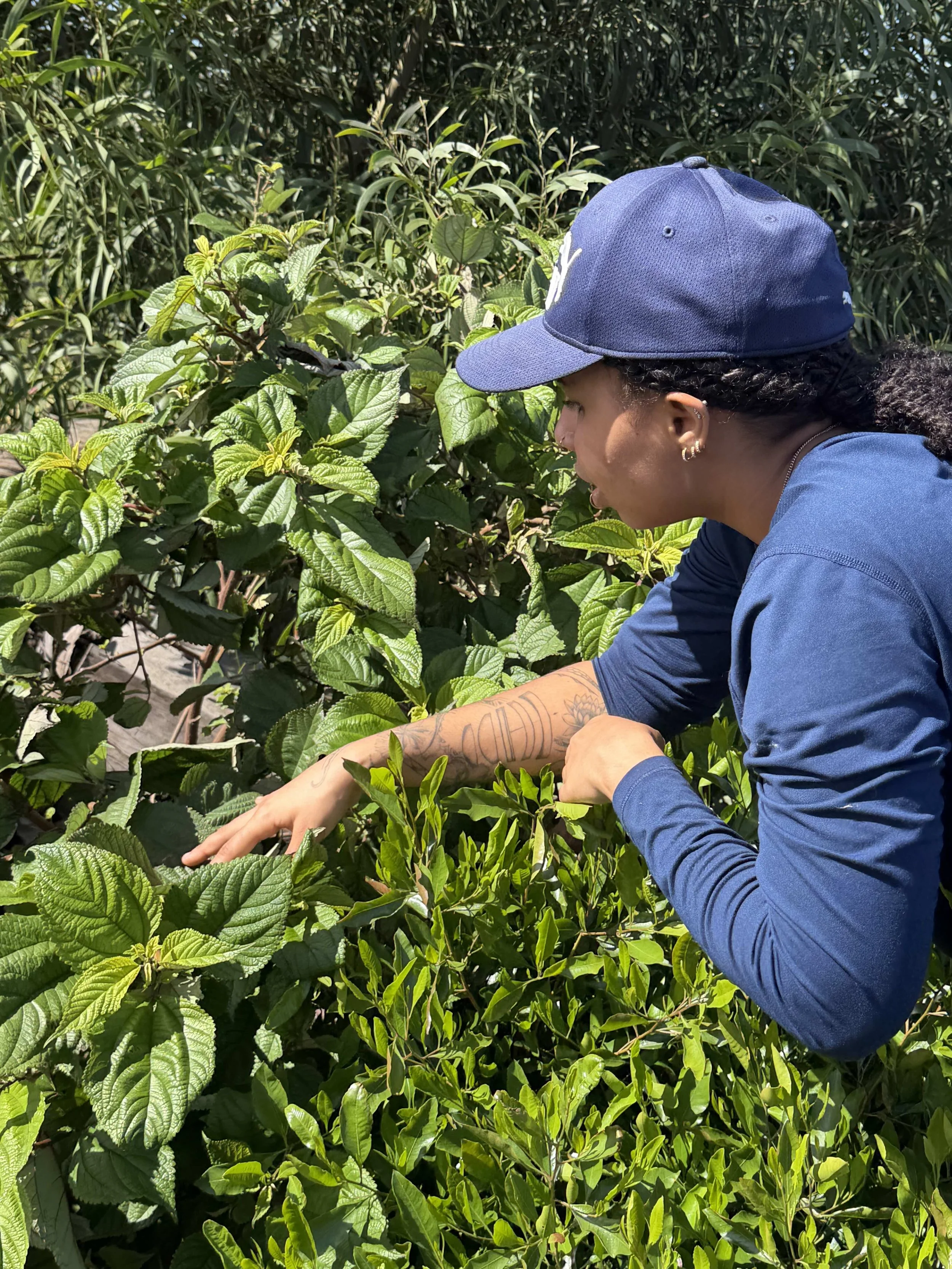
Meʻilanikealoha Nelson
RESTORATION TECHNICIAN (KUPU)
While growing up in Kīhei, Me’ilani developed a connection to the kai and a strong commitment to community-centered environmental stewardship. With six years of experience in educational outreach and volunteer work, she now hopes to deepen her hands-on relationship with and understanding of the ʻāina through the long-term ecological resilience work carried out by KCWA. Me’ilani holds an Associate of Applied Science in Communications and a Bachelor of Fine Arts in Photography, and plans to continue her studies in the near future with a degree in Environmental Sciences. She and her family live in Kula. -

Darla White
GIS CONSULTANT
Darla is a longtime Maui resident, marine ecologist, and GIS specialist with more than 20 years of experience in conservation and natural resource management across Hawaiʻi. She holds an M.S. in Tropical Conservation Biology and Environmental Science and a graduate certificate in Geographic Information Science, and has applied GIS to fisheries, coral reef management, renewable energy planning, and disaster risk reduction. At KCWA, Darla leads spatial analysis and mapping that help track restoration work across the burn scar, connect field data to the landscape, and support long-term planning and monitoring across the Waiakoa watershed.
Dave Albright, President
Sabrina Fehlmann, Vice President
Elizabeth Anderson, Treasurer
Andrea Perkins, Secretary
OUR BOARD
Governed by the community that created us.
Pam Albright
Gayle Hart
Glenn James
Monica Iwalani Kapahua Loui
Dan McEvoy
Anne Rillero
Matthew Swartz
KCWA’s board is rooted in the community and landscape affected by the Kula Fire.
Board members bring lived experience, local knowledge, professional expertise, and a direct understanding of what long-term recovery requires. Their role is to provide governance, accountability, and strategic direction while helping ensure that KCWA remains grounded in the community-led values on which it was founded.
Because KCWA grew out of a hui of fire-affected neighbors, that connection matters. Our board is not separate from the landscape we serve — it is part of the community living with its recovery.
OUR ADVISORS
Guided by deep knowledge of place and practice
KCWA’s work is strengthened by advisors who bring expertise in restoration ecology, hydrology, wildfire science, cultural practice, forestry, land management, community resilience, and other areas important to long-term watershed recovery.
Our advisors help us ask better questions, evaluate emerging conditions, refine restoration strategies, and connect field decisions to established science, cultural knowledge, and decades of practical experience.
They do not replace community knowledge or staff decision-making. They help us bring multiple forms of expertise into conversation as we adapt our work over time.
Steve Anderson, Restoration Ecologist
Sarah Bryan, Nā Koa Manu Conservation
Scott Fisher, Hawaiʻi Land Trust
Paul Gillespie, Green Earth Landscape
Joseph Imhoff, Skyline Conservation Initiative, Limua Maui
Kealiʻi Reichel
Michael Reyes, Maui Environmental Consulting
Rich Tully, Tully Studio
KCWA is grateful to David and Patti Chevalier of Nāhele Hou Foundation for providing space for KCWAʻs Community Restoration Nursery and restoration baseyard at their newly conserved Pūlehunui Sanctuary.
PARTNERS & SUPPORTERS
The Alliance is part of a much larger network.
KCWA works alongside landowners, agencies, conservation organizations, schools, funders, businesses, restoration practitioners, and community groups who contribute knowledge, resources, labor, access, and long-term support to the work.
These relationships make landscape-scale restoration possible.
VOICES OF OUR COMMUNITY:
