PARTNERS & SUPPORTERS
Restoration at this scale is collective work.
No single organization can restore a watershed alone.
KCWA’s work is made possible by landowners, cultural and technical advisors, restoration practitioners, government agencies, conservation organizations, schools, businesses, foundations, individual donors and volunteers who contribute knowledge, funding, labor, equipment, access and long-term commitment to the recovery of Kula.
Together, these relationships make landscape-scale restoration possible.
Featured Partnerships
Relationships that shape how and where we work
Some KCWA partnerships go beyond funding or one-time project support. They provide land, institutional capacity, restoration history, technical collaboration, or connection to larger conservation and resilience efforts.
These are relationships that have helped shape KCWA’s work and make long-term landscape-scale restoration possible.
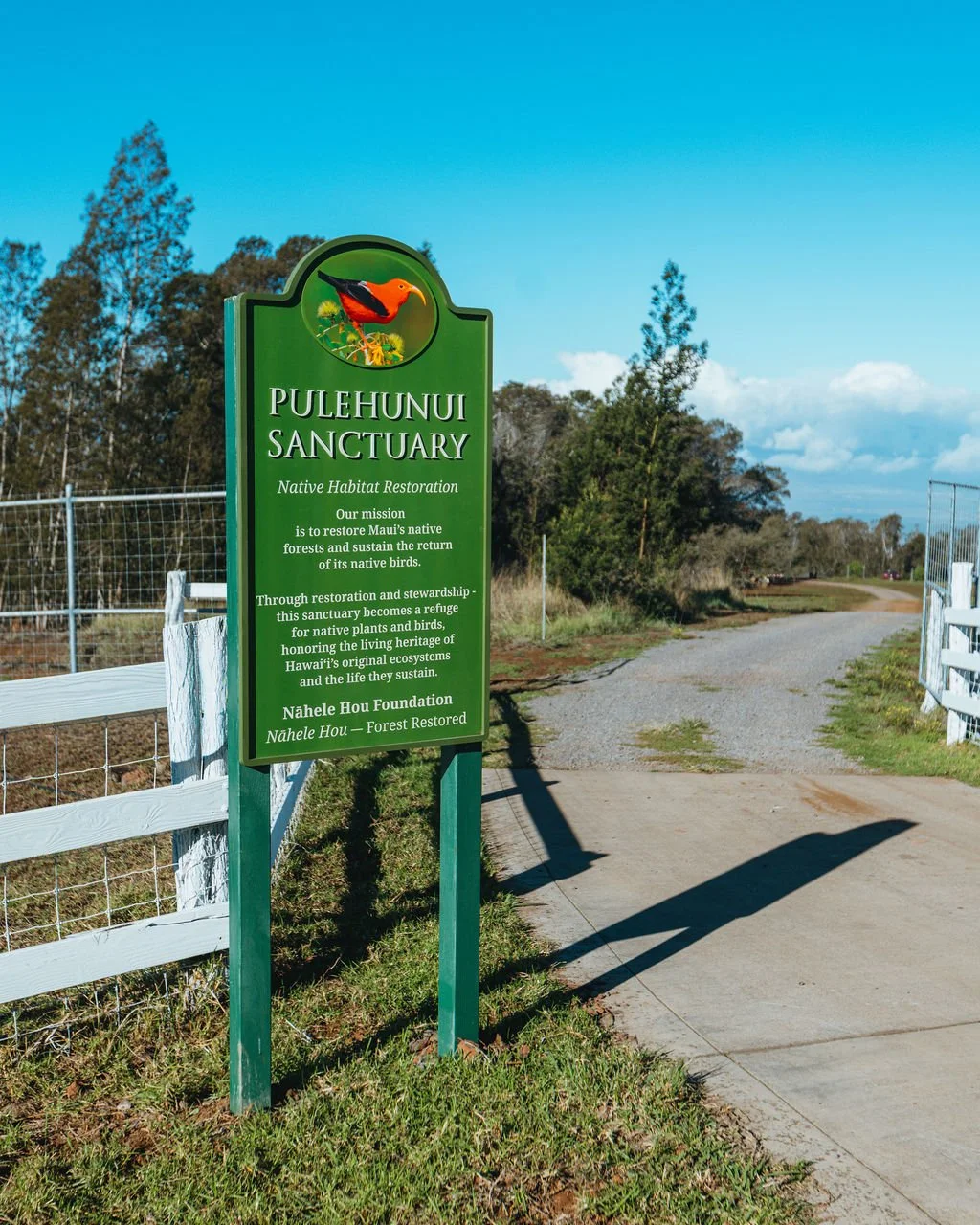
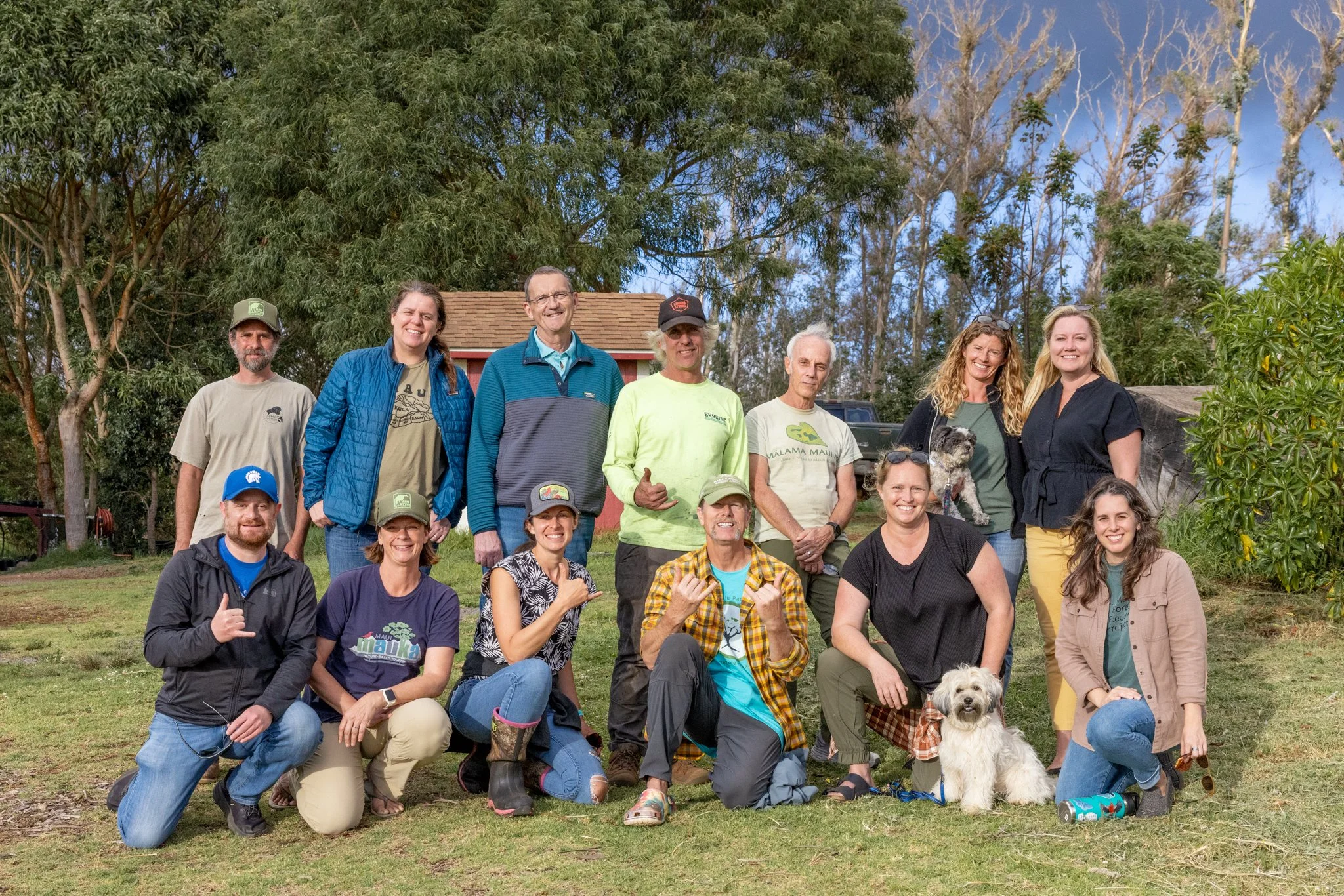
Nāhele Hou Foundation / Pūlehunui Sanctuary
A long-term home for restoration, learning, and stewardship
Pūlehunui Sanctuary provides KCWA with something essential to long-term restoration: a place where we can work, learn, and observe change over time.
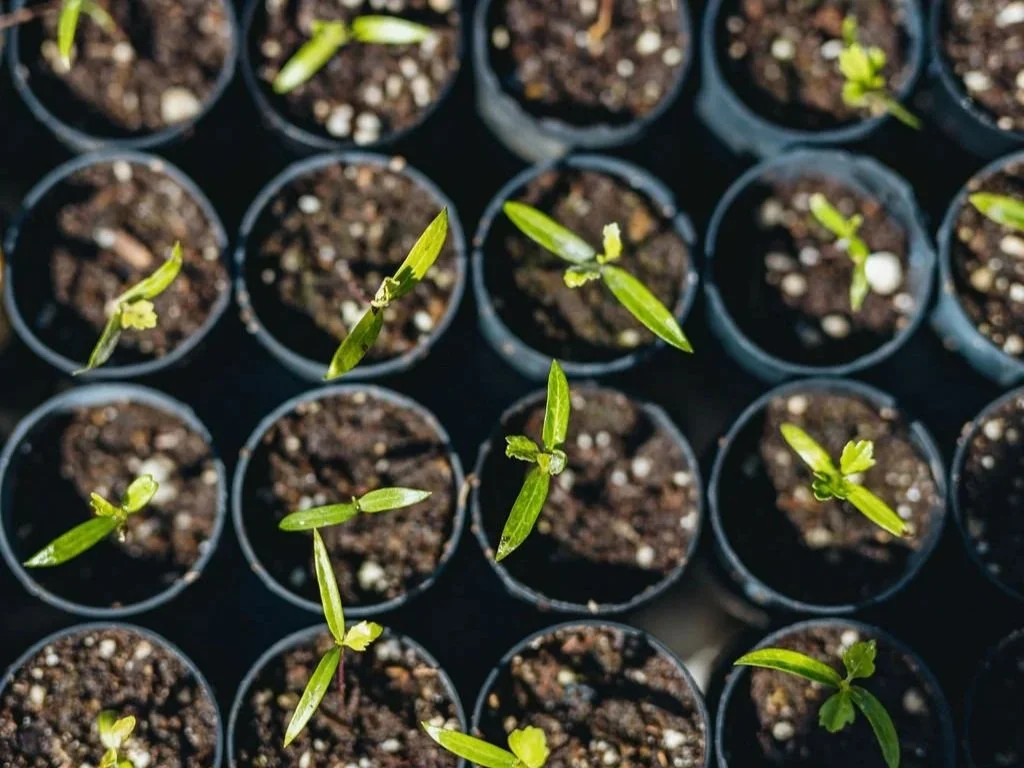
Through our relationship with Nāhele Hou Foundation, KCWA has established its Community Restoration Nursery and restoration base at Pūlehunui, creating space for native plant propagation, demonstration projects, monitoring, education, and long-term stewardship.
This partnership allows us not only to carry out restoration work, but to test approaches, learn from the landscape, and build the capacity needed to support restoration across the wider Kula Fire area.
Nā Koa Manu Conservation
An early and steadfast institutional partner in KCWA’s growth
Nā Koa Manu Conservation (NKMC) played an important role in KCWA’s early development, helping a newly formed community effort grow into an organization capable of managing increasingly complex restoration work. NKMC also provided opportunities for us to learn from its other Partner Projects along the way.
Through fiscal sponsorship and administrative support, Nā Koa Manu helped KCWA move quickly during a period when the need on the landscape was immediate and our own organizational systems were still being built.
That early partnership helped translate community urgency into funded work on the ground.
Read NKMC’s 2026 Impact Report
Skyline Conservation Initiative
A place that helped KCWA begin — and continues to support the restoration
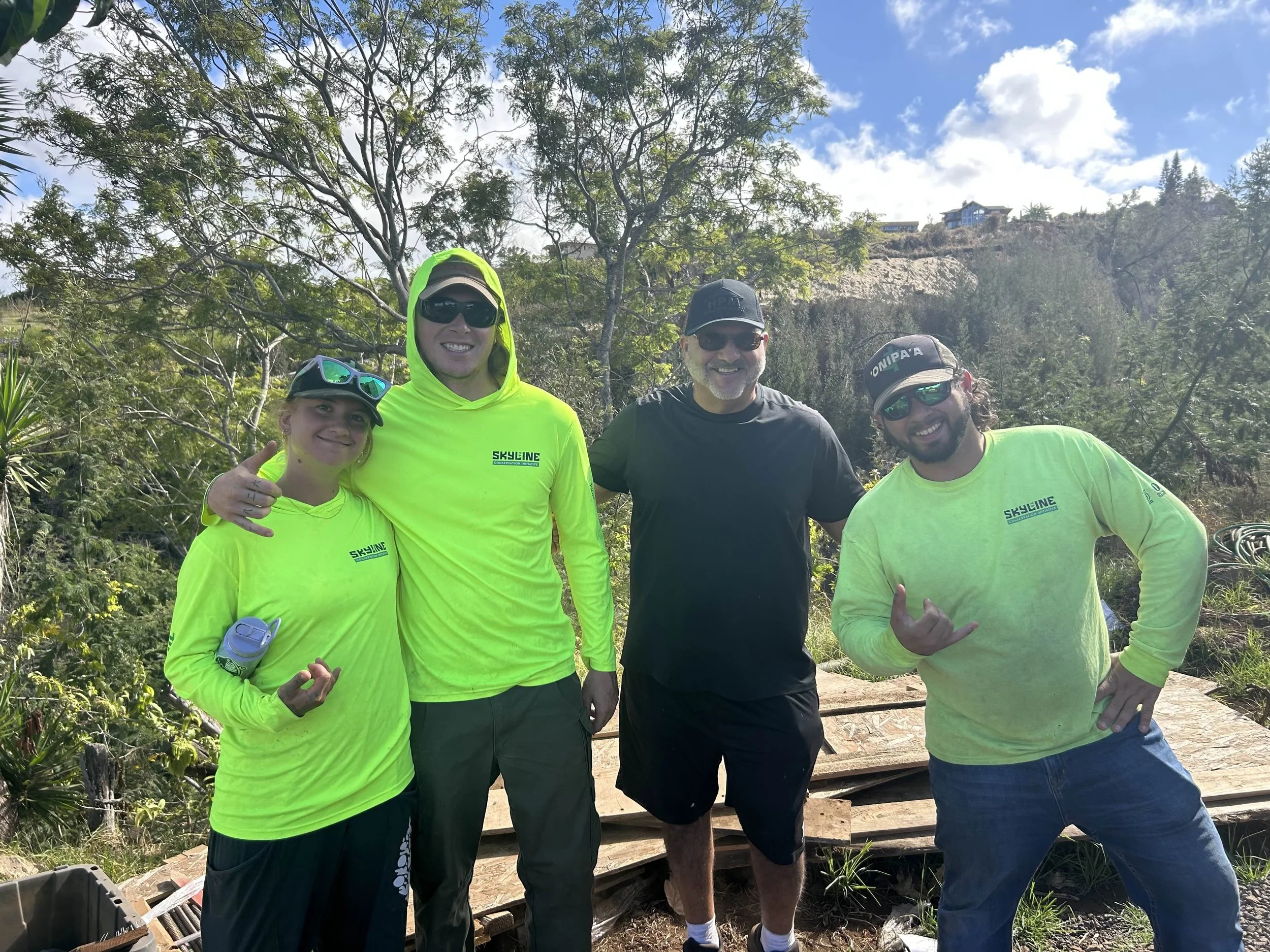
KCWA’s relationship with the Skyline Conservation Initiative reaches back to the very beginning of our organization.
Just weeks after the Kula Fire, Skyline hosted the gathering of fire survivors and neighbors that ultimately gave rise to the Kula Community Watershed Alliance. In a moment of enormous uncertainty, the restored landscape there offered the community a tangible example of what long-term care for land could make possible.
Since then, Skyline has continued to serve as a gathering and learning place for KCWA and the fire-affected community—hosting KCWA’s early community potlucks, seed collection hikes, restoration workshops, and other opportunities for neighbors to reconnect with the land and with one another.
Skyline also provided an early seed fund that helped launch KCWA in the months following the fire, giving the new organization critical support at a time when the need to act was immediate.
This partnership is woven into KCWA’s origin story and continues to support the community relationships, restoration learning, and sense of possibility that remain central to our work.
Maui Resilience Partnership
Connecting Kula’s work to island-wide resilience
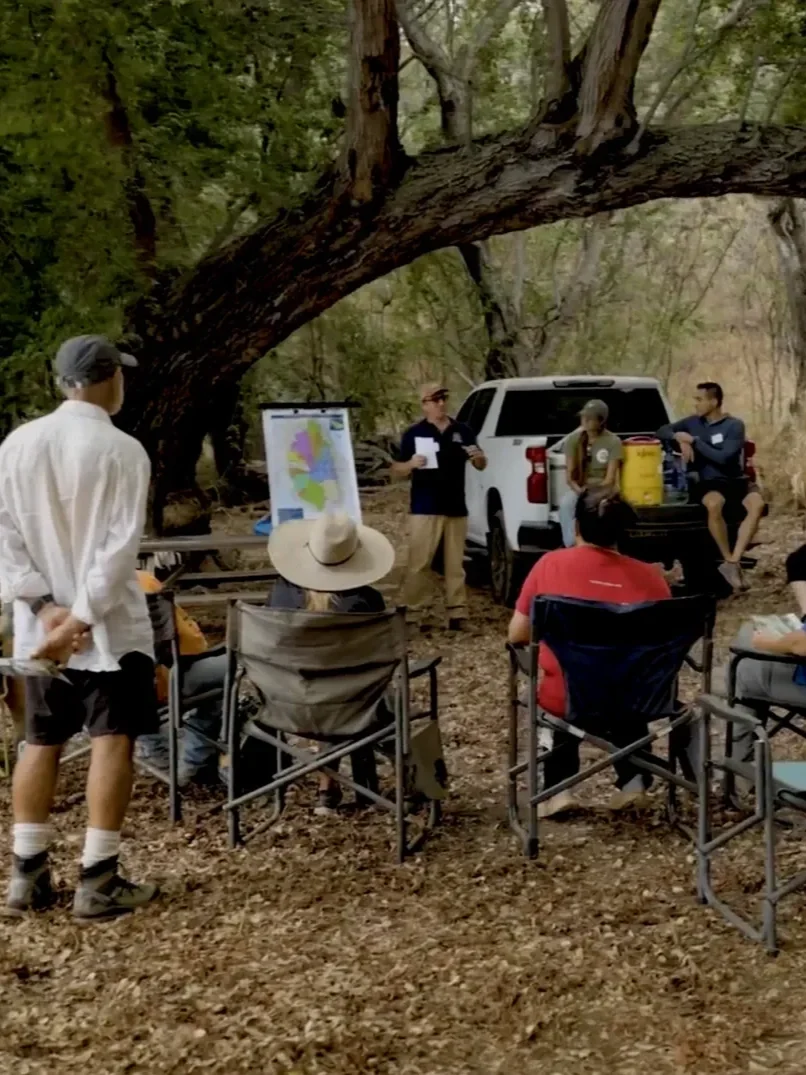
KCWA is a member of the Maui Resilience Partnership, a Hawaiʻi-rooted collaboration of community organizations, cultural practitioners, scientists, land stewards, and partners working to strengthen wildfire resilience, watershed health, and long-term stewardship across Maui.
For KCWA, the partnership is an opportunity to share what we are learning through community-led restoration in the Kula Fire landscape while learning from organizations working in very different ecosystems and communities across the island.
It reflects a principle at the heart of our own work: resilience is built through connection.
Our Wider Network
Many forms of partnership make this work possible.





FOUNDING SUPPORTERS
The people who helped us begin
In the weeks and months following the 2023 Kula Fire, individuals, families and businesses stepped forward with early financial support that allowed a newly organized group of fire-affected neighbors to begin acting immediately.
Their generosity helped KCWA take its first steps toward the organization and restoration effort it has become today.
View Our 2023 Founding Supporters
-
Anonymous
Michael Antonov -
Anonymous
Patricia & David Chevalier
Skyline Hawaiʻi -
Anonymous
Albright Family Trust
Craig Bachrodt
Joan Edwards
Cook Family Foundation
David & Alisha Lindquist
Barbara Miller
Chris Reed
Phoenix Vincent
-
Anonymous (3)
Jessica Adams
Juliet Ameduri
Mary Ann Anderson
Tahnee Beard
Shaun Braddy
Nicholas Bufano
Elizabeth Cardenas
Ellen Cmolik
David Dodgin
EmBody Movement
Michelle Ferndandes
Ryan Goldman
Barbara Griffin
Matthew Guss
Hawaiʻi Community Foundation
Mario Hoyos
Jordan Kokkoris
Falko Krismayr
Justin Marks
Paul Marino
Martirena Family Foundation
Ross Miller
Serena Poon & David Sinclair
Helen Qian
Christopher Read
Russell Robertson
Sally Saad
Samuel Schafer
Robert StewartInger
Inger & Richard Tully
Jason Watts
GariLynn Wollard
Jason Watts
GariLynn Wollard -
Anonymous (11)
Praj Chatchaya Akepapan
Kenjy Asakura
David Berman
David M. Berman
Sonia Bhatia
Angela Cameron
Colleen M. Connolly
Dee Crescini
Brain Davidson
Michelle & Brent Freeman
Avnish Goyal
Jody & Hlen Greenawalt
Mary Anna & Steve Grimes
Niall Hebron
Rachel & David Hersh
Margaret Hooper
Glenn James
Margie & Kent Joshi
Alyssa Keshavjee
AnneMarie Lerch
Michelle Mata
Gina McAndrews
Natalie Michele
Jeremy Mitchell
Mario Montoya
Pavla Nygaard
Angela & Derrick Pau
Margauz Primat
Christine Rattin
Brooke & Lance Reichert
Leslie Resnick
Olga Roberts
Thomas Rocas
Daryl Rocheleau
Michael Rush
Brian Sandy
Aarati Sawhney
Paulina Stankiewicz
Robert Stewart
Susie Tan
Ha Tran
Nicole Van Den Bosch
Sergio Von Schmeling
Rob Wallance
Stephane Werths
Dennis Wong -
Anonymous (19)
Paula Ambre
M & P Anderson
Mark Anderson
Greta Bergdahl Walker
Patricia Bonilla
Julee Brooke
Melissa Loan Bui
Anna Castilla
Mary Caputo
Rafael Carrillo
Julie Cho
Sophie Chou
Sofia Christakis
Susannah Christy
Amanda Coble
Sonnet Coggins
Caroline Cohen
CSI Control Systems
Jason Cunningham
Robert Dekanski
Botty Dimanov
Ana Eljuri
Shannon Ellison
Quinn Finnigan
Torie Fish
Chantal Gakwaya
Joy Galatro
Don Gillespie
Avnish Goyal
Meagan Gray
Jay Gundotra
Charisse & Curt Haws
Carlos Herrera
Erin Hsu
Perla Hudson
Pat & Bill Imhoff
Antonia Jimina
Kelly King
Rosalie Klein
Jane Kocivar MD
Gayoung Kwon
Terry Lamberson
Schalk Lazare
Lawrency Leahy
Krystal & Luc Longmire
Kurt Luidhardt
Jacquie Marquez
Scott Martin
Vasna McCreery
Meaghan McCue
Ellie Miller
Melissa Mittag
Savannah Murphy
Sasha Noe
Sarah & Mike Pappas
Paul Peters
Jean Marie Pfeifer
Stacie Power
RedCloud
Nancy A. Rhodes
Tasha Riddle
Anne Rillero
Kristen Riter
Anthony Sarandrea
Maxime Sigouin
Carl Steinmann
Shanyn Stewart
Mele Stokesberry & Chuck Carletta
Raphael Tripet
Michelle Tromans
Marilyn Vierra
Consuelo Vilar
Francis Yang
We are deeply grateful to all of our donors for sustaining our work to restore the burned areas of Kula and bring vitality back to the lands we call home. Mahalo nui.
Become a Partner
Restoring a watershed takes many kinds of participation.
KCWA works with agencies, conservation organizations, schools, researchers, cultural practitioners, businesses, funders, landowners and community groups who bring different forms of knowledge, capacity and support to the work.
Partnership can take many forms — technical expertise, funding, equipment, plants, research, education, volunteer service, in-kind support, shared projects or long-term collaboration.
Healthy landscapes are built through strong relationships. We welcome partners who want to help care for this place over the long term.