One Valley in a Larger Landscape: KCWA Joins the Maui Resilience Partnership
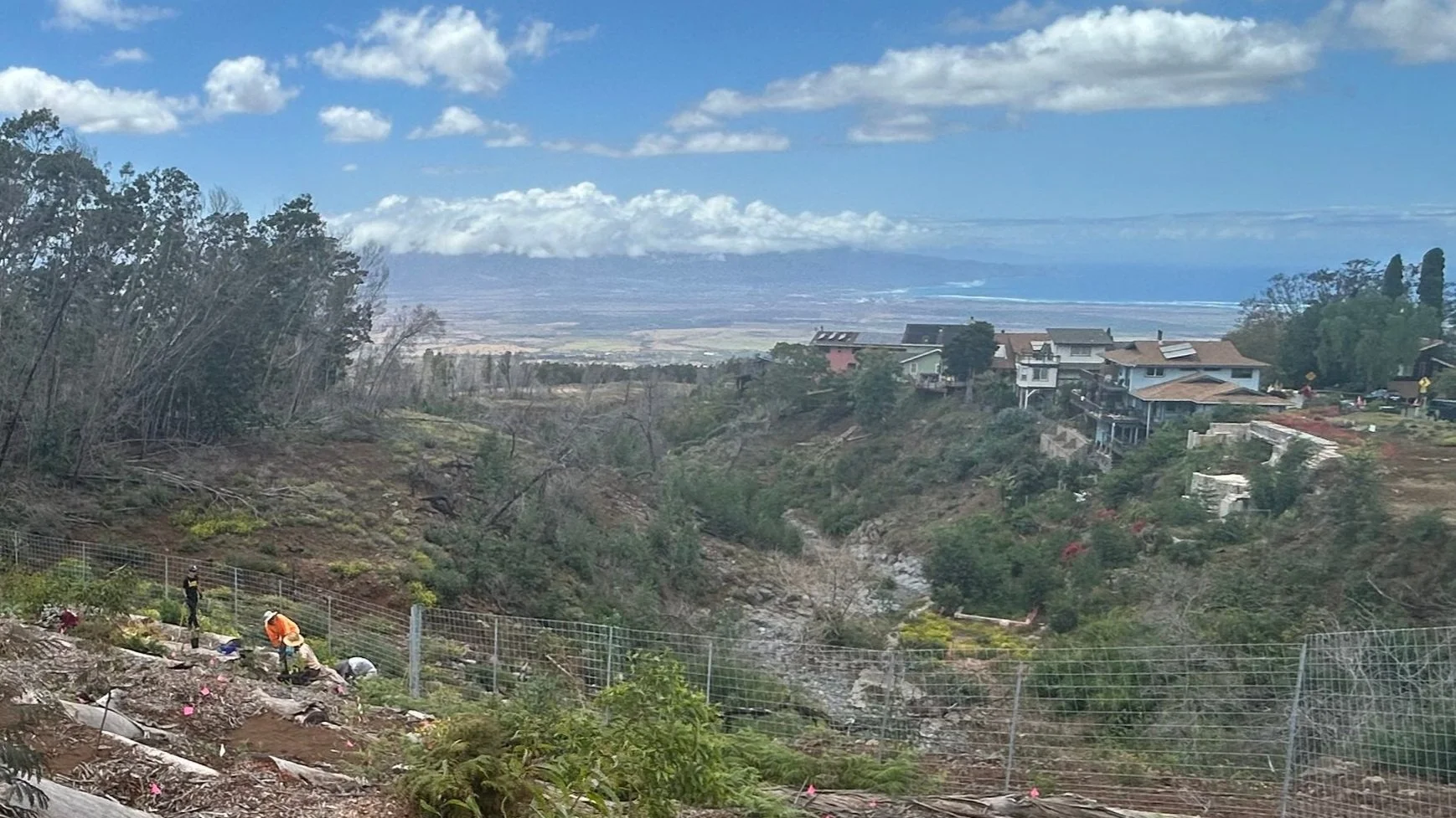
Looking into the Kula Fire burnscar in 2024.
The Kula Fire taught us very quickly that landscapes do not organize themselves according to property lines.
Water moves downhill. Fire moves with wind and fuel. Invasive species spread. Wildlife moves freely across fences and parcels. The health of one piece of land affects the land around it.
That understanding has shaped the Kula Community Watershed Alliance from the beginning. Our work brings dozens of landowners together to restore Kula’s fire-affected landscape as one connected watershed.
Increasingly, we are also seeing that the same principle applies at a much larger scale.
KCWA is now a member of the Maui Resilience Partnership, a Hawaiʻi-rooted collaboration of community organizations, cultural practitioners, scientists, land stewards, and partners working together to strengthen wildfire resilience, watershed health, and long-term recovery across Maui.
The partnership connects organizations working in very different landscapes and communities across the island—from native forests and watershed protection areas to farms, neighborhoods, and fire-affected communities. Collectively, partners are engaged in restoration and stewardship across approximately 66,000 acres.
For KCWA, joining this partnership feels like a natural extension of what we have been learning in Kula.
No single organization can do this alone
Wildfire resilience sits at the intersection of many systems.
It includes fuels management and invasive species control. It includes native forest restoration and watershed protection. It includes agriculture, ungulate management, home ignition-zone work, emergency preparedness, community education, land-use decisions, and long-term stewardship.
No single organization carries all of that expertise.
The Maui Resilience Partnership creates space for organizations working on different pieces of the system to learn from one another, identify shared challenges, strengthen coordination, and help connect community-based work with larger policy and investment decisions. Its stated work includes native forest and watershed restoration, invasive species and fuels management, neighborhood wildfire readiness, regenerative agriculture, leadership development, impact measurement, and collaboration with County and State leaders.
That kind of connection matters.
What Kula brings to the partnership
KCWA comes to this work from a very particular place.
We are a community-led organization born directly from the August 2023 Kula Fire. Today, through the Kula Fire Restoration Project, we coordinate restoration across approximately 120 acres and 84 properties within the fire-affected landscape. An additional 72 acres in nearby hazard-prone areas are slated for mitigation and resilience projects beginning in 2027.
Our work has required us to learn how to coordinate ecological restoration across dozens of privately owned parcels while maintaining relationships with the people who live there.
We are learning what it takes to move from emergency response to long-term stewardship. We are learning how fuels management, invasive species control, erosion, fencing, native revegetation, monitoring, and home-level wildfire resilience relate to one another.
And we are learning that the human infrastructure behind restoration—trust, communication, coordination, and shared responsibility—is every bit as important as the physical work happening on the land.
Those are lessons we can bring into a broader Maui conversation.
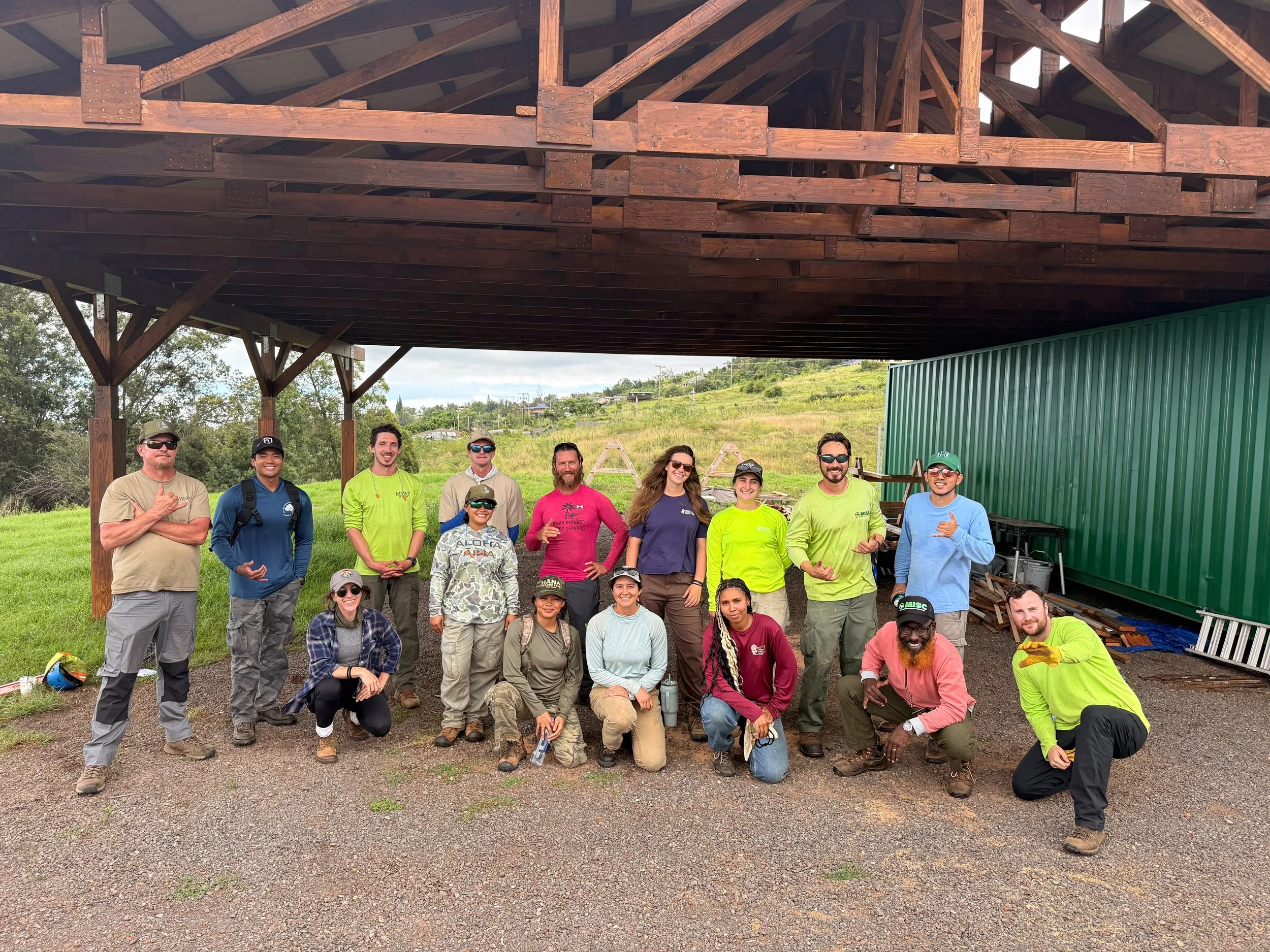
A collaborative sawyer training hosted at KCWA’s baseyard, August 2026
And we have a great deal to learn
Partnership also means recognizing the limits of our own experience.
Kula is one landscape.
Conditions in East Maui are different. West Maui is different. Agricultural lands, native forests, ranchlands, and residential communities each require different approaches.
The value of collaboration is not that everyone begins doing the same thing.
It is that we can learn why particular approaches work in particular places—and become better at choosing the right tools for the landscapes and communities we serve.
Resilience is a network
One of the clearest lessons of the past three years is that resilience is not a single project.
It is a network of relationships.
A healthier watershed depends on relationships among neighboring landowners. Community wildfire resilience depends on relationships among residents, land managers, scientists, cultural practitioners, nonprofit organizations, agencies, and decision-makers.
And Maui’s long-term resilience depends on connecting the work happening in individual places into something larger than any one organization could accomplish alone.
We are grateful to join the Maui Resilience Partnership and to contribute what Kula is learning while learning from others doing this work across our island.
Because just as a watershed is made stronger by the connections within it, our communities are stronger when we work together.