What We Brought Home from the Wildfire Leadership Summit
Reflections on land, fire, water, and the systems beneath long-term recovery
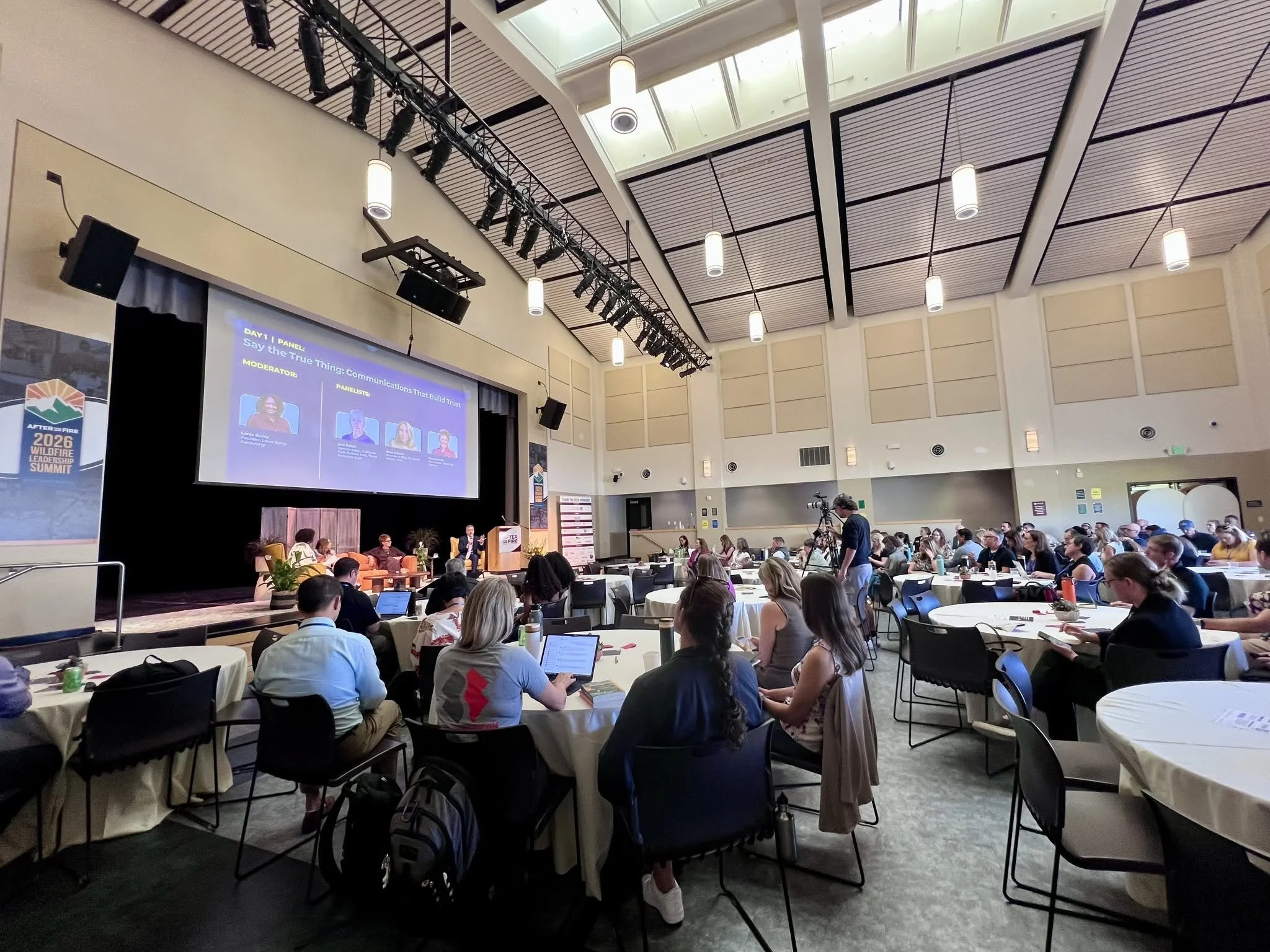
After the Fire USA’s Wildfire Leadership Summit, Photo: After the Fire USA
Last week, I had the opportunity to represent KCWA at After the Fire USA’s Wildfire Leadership Summit in Sonoma, California, where I joined an extraordinary group of wildfire survivors, land stewards, scientists, practitioners, and community leaders from across the country.
I spoke on a panel called “The Land Remembers: Water, Fire, and the Systems Beneath Recovery,” alongside Algeo “Che” Casul of The Ranch at Bodega, Ralph Bloemers of Fire Safe People Productions, and Steven Lee of Sonoma Ecology Center. The conversation centered on a question that feels very familiar to us in Kula: How do communities steward the land that supports them while also making homes and neighborhoods better prepared for the next fire?
Maui had a strong presence throughout the Summit. In addition to KCWA’s panel, Maui voices were represented on two other panels and in the closing keynote, bringing perspectives shaped by the 2023 fires into conversations about recovery, land stewardship, community resilience, and what comes next. The Summit also began and ended with Hawaiian mele, which gave the gathering a sense of connection to place that felt especially meaningful to those of us who had traveled far from our island home.
I went into the Summit expecting to talk about restoration. I came home thinking even more about relationships, context, and time.
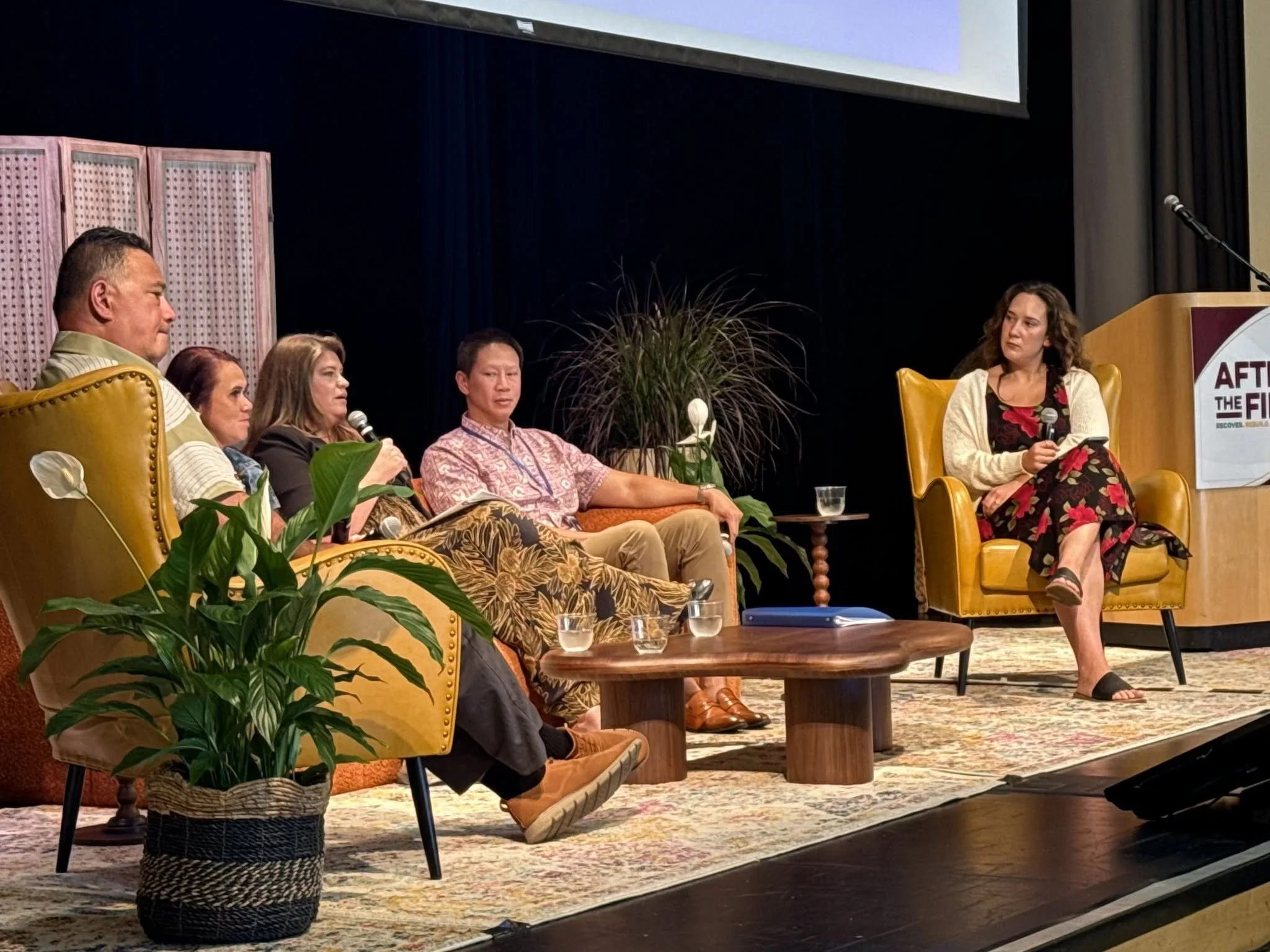
Photo: After the Fire USA
The land remembers more than fire
One of the ideas that stayed with me most is that the landscape we see after wildfire is never simply the result of the fire itself. It reflects everything that came before it: decades of land management, species introductions, grazing, abandonment, development, changing water patterns, invasive vegetation, conservation decisions, and shifting climate conditions.
In other words, the fire reveals a system that was already there.
That resonates deeply with our work in Kula. We are not restoring a blank slate. We are working in a landscape that carries layers of history, some visible and some not. Certain invasive forests and fuel conditions we manage today are the legacy of earlier decisions that made sense in a different context. In other places, remnants of native vegetation, old soil structure, or subtle patterns of water movement are quietly telling us something about what the land still remembers.
That perspective changes the tone of restoration. It makes the work less about “fixing” a damaged landscape and more about reading it carefully, understanding what shaped it, and making better decisions from here.
The land remembers not only the fire. It remembers how we have cared for it.
The right tool depends on the place
I was also struck by how many people at the Summit work in landscapes where prescribed fire is a central and important part of stewardship. That is not the context we are operating in here, and it made for some really useful thinking.
The lesson I took away was not that every community should use the same tool. It was almost the opposite: every community has to understand its own landscape well enough to know which tools belong there.
In one place, prescribed fire may be the right approach. In another, grazing may make sense. Somewhere else, the answer may be mechanical fuels reduction, invasive species control, native revegetation, fencing, erosion treatment, home hardening, or some combination of all of these. Even the role of non-native vegetation can be more complicated than a simple good-or-bad distinction. A plant may provide temporary soil stabilization or shade while still creating long-term fuel, spread, or maintenance problems.
That kind of complexity can be uncomfortable, especially when people understandably want a clear answer. But restoration rarely offers one.
For me, the more useful question is often: What is the best next step for this landscape?
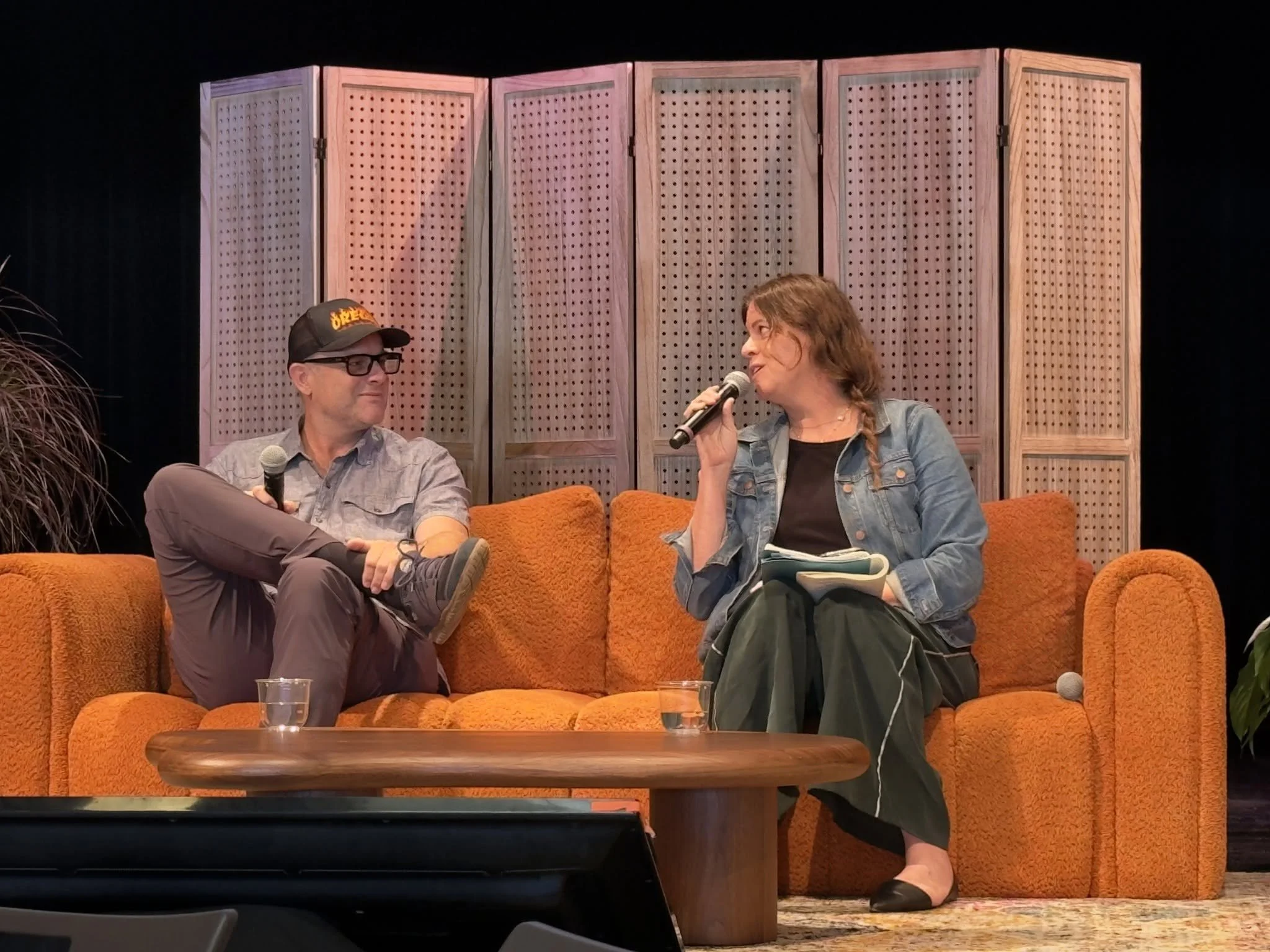
Ralph Bloemers of Fire Safe People Productions and I, on our panel entitled “The Land Remembers: Water, Fire, and the Systems Beneath Recovery,” Photo: After the Fire USA
Kilo: paying attention before deciding
That question leads naturally to one of the practices we return to again and again at KCWA: kilo, the practice of careful, sustained observation.
Plans matter. Maps matter. Science matters. But the landscape is always revealing patterns, cycles, and changes that no plan can fully predict.
Where does water move after a storm? Which plants come back on their own? Which ones struggle? Where are deer entering? Where is erosion beginning to cut? Where are fuels reconnecting? What happens six months after we clear an invasive stand, not just six days later?
This is why monitoring matters so much to us. We use repeat photography, field observations, GIS, and landowner knowledge to understand how the landscape is responding and to adjust as we go.
Kilo keeps us from confusing the plan with the landscape. Our map is a hypothesis. The land tells us whether we were right.
From the watershed to the home
Another thread that kept surfacing was the relationship between landscape-scale restoration and the safety of individual homes.
Wildfire conversations are often divided into two separate worlds. One is about the landscape: forests, fuels, invasive species, erosion, watersheds, vegetation, and land stewardship. The other is about the home: embers, roofs, vents, decks, vegetation near structures, and the Home Ignition Zone.
In reality, communities need both.
Before the Summit, I completed Home Ignition Zone assessor training through Hawaiʻi Wildfire Management Organization with fire scientist Jack Cohen. That experience sharpened something I had already been feeling in our work: landscape restoration and home resilience are complementary, but they are not interchangeable.
Restoring a watershed cannot guarantee that a home will survive a wildfire. Likewise, hardening a home does not replace responsible stewardship of the land around it.
For KCWA, this creates an important opportunity. Because our work already brings us into long-term relationships with residents across the fire-affected landscape, we can help connect those conversations—from the slope above the property, to the vegetation and fuels surrounding it, all the way to the structure itself.
Resilience has to connect the watershed to the home.
The invisible infrastructure of recovery
If there is one thing I think KCWA has learned most clearly over the past three years, it is that restoration is as much a human systems challenge as it is an ecological one.
The visible project might be a fence, a native planting, an erosion-control structure, or a hillside cleared of invasive vegetation. But underneath that project are meetings, trust, grant agreements, schedules, landowner conversations, contractor coordination, records, follow-up, and a hundred small decisions that keep the work moving.
And all of that is happening while people are still living through the long tail of disaster recovery.
That matters. A fire-affected resident does not need to attend every meeting or become an expert in restoration to participate meaningfully. Sometimes participation means walking the property with us, telling us what matters, understanding the proposed work, and being part of a shared decision.
Part of our role is to carry some of the complexity so individual landowners do not have to carry all of it themselves.
The fire crossed property lines. Recovery has to cross them too.
And the relationships that allow that to happen are not incidental to the work. They are part of the resilience infrastructure.
The long part begins after the emergency
Wildfire recovery begins in urgency. There are dangerous trees to remove, roads to open, erosion to stop, homes to rebuild, and immediate hazards to address.
But ecological recovery does not operate on the same timeline.
Plants need years to establish. Invasive species return. Fences need repair. Weather changes. Landowners’ circumstances shift. Some treatments work exactly as hoped; others need to be adjusted.
That means the real test of restoration is often not what something looks like immediately after the work is done, but what is still happening three, five, or ten years later.
One of the questions raised at the Summit was what a funder should come back and look for several years after a project is completed.
My answer would not be just acres treated.
I would want to know whether the landscape is still being cared for. Whether native vegetation established. Whether fuels are being managed. Whether the treatment held. Whether people are still working together. Whether there is a system capable of continuing the work.
Because restoration is not a project with a clean ending.
It is a relationship with a place over time.
What Kula brought — and what we brought home
KCWA came to Sonoma with a very specific story to tell.
We are a community-led organization born directly from wildfire. Our board is made up of people from the fire-affected community. Our work spans dozens of privately owned properties that function ecologically as one connected landscape. We are learning, in real time, what it means to move from disaster response into long-term watershed stewardship.
That perspective felt important to bring into the room.
But I also came home with a renewed appreciation for how much there is to learn from people working in very different landscapes and communities. The tools are not always transferable. The ecology is different. The cultural context is different. The history is different.
And that is exactly why these conversations matter.
We do not need to copy one another. We need to understand one another well enough to ask better questions of our own place.
Three years ago, fire survivors gathered beneath a restored native canopy at Skyline and imagined what recovery might look like if we worked together. That idea has grown into something much larger than any one project or property.
The Summit reminded me that this is true far beyond Kula.
Resilience is built through relationships: between people, between properties, between institutions, and between communities and the landscapes that sustain them.
That is what I brought home from Sonoma, and it’s what we intend to keep building here.